
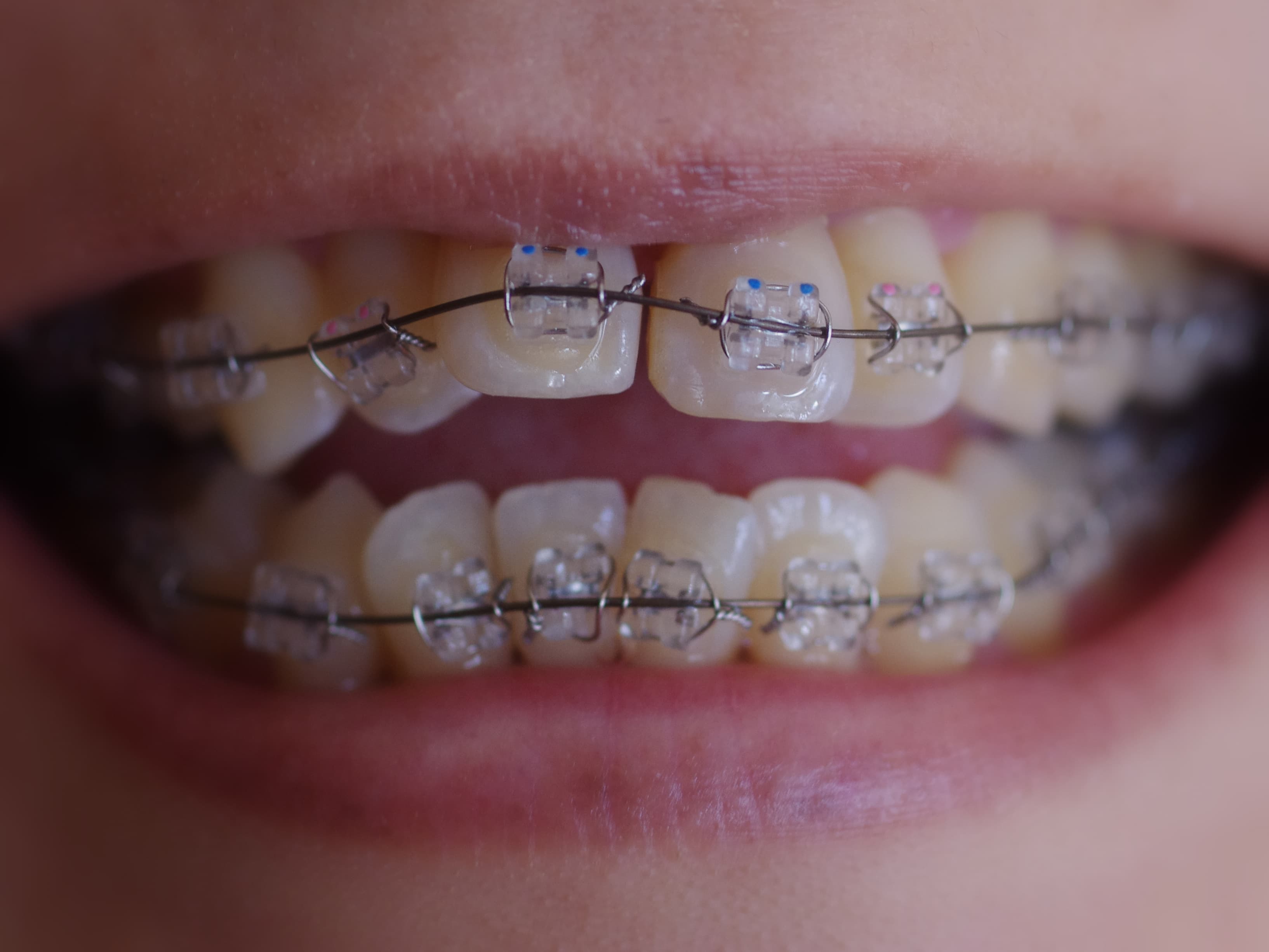
Aligners get asked for by name more than any other treatment now, but they aren't automatically the better option. It depends on what needs to move, and by how much.
What clear aligners are good at
Clear aligners work well for mild to moderate crowding, spacing, and minor bite adjustments. They're removable for eating and brushing, and far less noticeable day to day — which is why adults ask for them so often. The trade-off is that they only work if you actually wear them for 20–22 hours a day; results slip quickly if they're left out too often.
What traditional braces are still better at
For more complex cases — significant rotation, large gaps, or bite corrections that involve moving teeth vertically as well as sideways — fixed braces give us more precise, continuous control than aligners can. They're not removable, which for some patients is actually an advantage: there's no decision to make about whether to wear them today.
Treatment time
Neither option is inherently faster. Timeline depends on how much movement is needed, not which appliance is used. What aligners do shorten, in practice, is the number of in-person adjustment visits.
The honest starting point is an X-ray and a bite assessment, not a preference for one appliance over the other.
We'll tell you plainly if your case isn't a good fit for aligners rather than fitting the treatment to the request.
This article is general information, not a diagnosis. Ask Dr. Nihar what applies to your mouth specifically.