
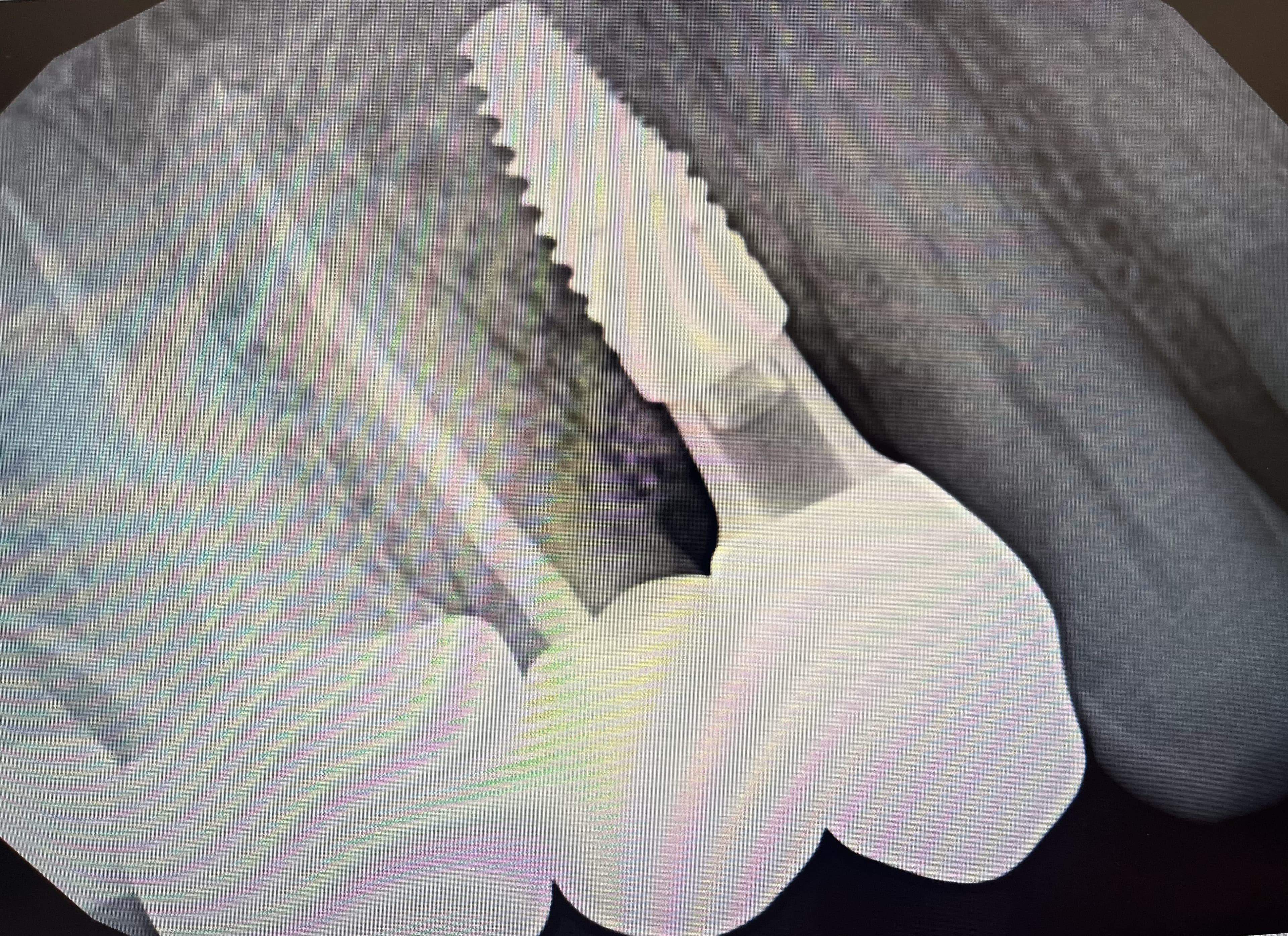
Almost everyone asks this before an implant appointment. The honest answer: the procedure itself is done under local anaesthesia, and most patients describe it as easier than they expected.
What happens during placement
Placing a dental implant means numbing the area completely, the same way we would for a filling or extraction. You'll feel pressure and vibration as the implant post is positioned in the jawbone, but not sharp pain. Most single-implant placements take under an hour.
What the first few days feel like
Some soreness, mild swelling and tenderness at the site are normal for two to three days afterward — comparable to what you'd feel after a tooth extraction. Over-the-counter pain relief is usually enough; we only prescribe something stronger if there's a specific reason to expect more discomfort.
- Stick to soft, lukewarm foods for the first 48 hours.
- Avoid smoking and alcohol while the site heals — both slow down bone integration.
- Keep the area clean, but be gentle brushing directly around it for the first week.
Why the healing period matters
The implant needs a few months to fuse with the jawbone before we attach the final crown — this is what gives it the strength of a natural tooth root, not just a cosmetic replacement. Discomfort during this stage is rare; if you notice ongoing pain, swelling or a loose feeling after the first week, that's worth a call rather than something to wait out.
Most patients tell us the anticipation was worse than the procedure itself.
If you're considering implants and the idea of pain is what's holding you back, that's exactly the kind of question worth bringing to a consultation — we'll walk through your specific case rather than a general answer.
This article is general information, not a diagnosis. Ask Dr. Nihar what applies to your mouth specifically.